
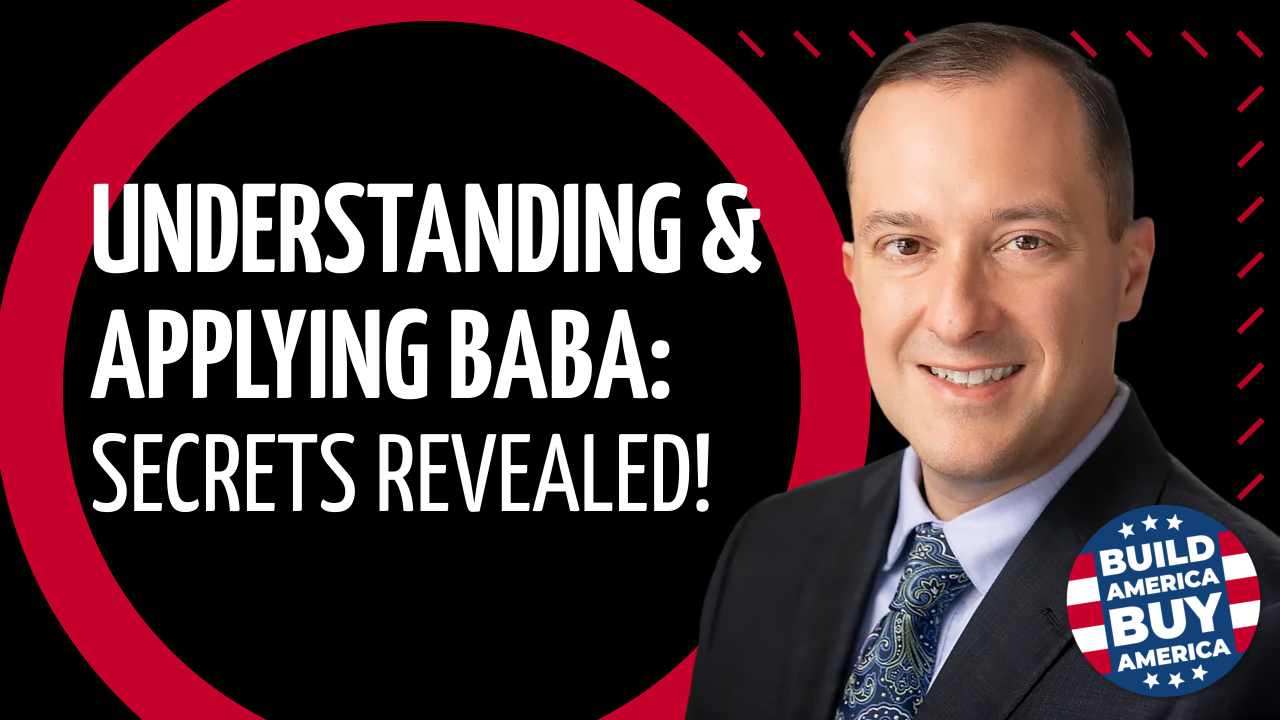
The Build America, Buy America (BABA) Act has significant implications for infrastructure projects in the United States. This guide will help you with understanding BABA Compliance, from identifying applicable projects to ensuring product and material eligibility.
The Three-Level Test of BABA Compliance
Steven Koprince has a three-level test to help understand BABA requirements. This test is also explained in his IIJA Buyers Checklist, a helpful tool for project managers, contractors, and suppliers who want to adhere to the Act’s requirements.
Want to hear Steven describe his system? Watch the clip here:
What is BABA compliance is one key topic covered by Stephen Koprince, a federal government contracts educator with over 20 years advising clients on federal purchasing matters, in our FREE On-Demand Webinar.
**Click this link to sign up for the Comply When You Buy Webinar!**
Or, you can download the Executive Summary and learn if these resources can help you understand domestic sourcing and benefit from investments in US infrastructure.
BABA Compliance Level 1: Project Requirements
The first step in understanding and applying BABA is identifying which infrastructure projects fall under its purview. Generally, BABA applies to federal financial assistance programs for infrastructure projects. These may include:
- Transportation infrastructure
- Public water systems
- Energy production and distribution systems
- Buildings and real property construction
It’s crucial to consult with the relevant federal agency or funding program to determine if your specific project is subject to BABA requirements.

BABA Compliance Level 2: Contract Analysis
Once you’ve established that a project is subject to BABA, the next level involves identifying which contracts within the project must comply with the Act’s provisions. This analysis includes:
- Determining which tier of contractors and subcontractors are responsible for BABA compliance
- Understanding the specific obligations each party has in ensuring adherence to BABA requirements
- Identifying any potential exemptions or waivers that may apply to certain contracts
Contractors at all tiers should be aware of their responsibilities under BABA and communicate clearly with project managers and suppliers to ensure compliance throughout the supply chain.

To learn more about how BABA Waivers, watch this clip from our Webinar! Waivers are a key topic for staying compliant.
BABA Compliance Level 3: Product Evaluation
The final level of the BABA compliance test focuses on identifying which products are subject to the Act’s requirements and determining whether they qualify as “Made in America.” This evaluation involves:
- Identifying covered products: BABA typically applies to construction materials, manufactured products, and iron and steel products used in infrastructure projects.
- Assessing product origin: For a product to be considered “Made in America” under BABA, it must meet specific criteria:
- Construction materials: All manufacturing processes must occur in the U.S.
- Manufactured products: At least 55% of the total cost of components must be of U.S. origin, and final assembly must occur in the U.S.
- Iron and steel products: All manufacturing processes, from initial melting through application of coatings, must take place in the U.S.
Understanding “Made in America” Under BABA Compliance
The concept of “Made in America” is central to BABA compliance. To truly understand and apply BABA, it’s essential to grasp what this designation means in practice.

Under BABA, “Made in America” goes beyond simple assembly or final manufacturing steps. The Act requires a significant portion of a product’s components and manufacturing processes to occur within the United States. This definition aims to support domestic manufacturing and strengthen the U.S. supply chain.
Key Considerations for Domestic Sourcing
When evaluating whether a product qualifies as “Made in America” for BABA standards and requirements, consider the following:
- Origin of raw materials: While not all raw materials must be sourced from the U.S., the Act encourages the use of domestic materials whenever possible.
- Manufacturing processes: The majority of manufacturing steps should occur within the U.S., with specific requirements varying by product category.
- Component sourcing: For manufactured products, a significant percentage of components (at least 55% by cost) must be of U.S. origin.
- Final assembly location: The final assembly or manufacturing process must take place in the U.S.
- Documentation: Maintaining thorough documentation of a product’s origin and manufacturing processes is crucial for demonstrating BABA compliance.

Implementing BABA Compliance in Your Projects
To effectively understand and apply BABA, project managers and contractors should implement a comprehensive compliance strategy:
- Conduct thorough project assessments: Regularly evaluate your projects to determine BABA applicability and identify potential compliance issues.
- Familiarize yourself with IIJA/BABA Resources: Explore the BABA resources provided by federal agencies and private groups to stay informed.
- Develop a supplier vetting process: Create a system for evaluating and approving suppliers based on their ability to provide BABA-compliant, domestically-sourced products.
- Implement training programs: Educate your team and subcontractors about BABA requirements and compliance procedures.
- Establish documentation protocols: Create a system for collecting and maintaining documentation that demonstrates BABA compliance throughout the project lifecycle.
- Stay informed about updates: BABA regulations and interpretations may evolve over time, so it’s crucial to stay current with any changes or new guidance from relevant agencies.
BABA Compliance Conclusions
By thoroughly understanding and applying BABA requirements, project managers and contractors can ensure compliance, support domestic manufacturing, and contribute to the strengthening of America’s infrastructure. Remember that BABA compliance is an ongoing process that requires diligence, communication, and a commitment to supporting American-made products in infrastructure projects.

Next Steps
Now that you understand the three-step test to applying BABA, why not watch our FREE on-demand, sponsored webinar featuring Steven Koprince, Government Purchasing expert and former Government Project Attorney.

Can’t find time to attend the webinar? Get the complete Webinar content overview in the Executive Summary by clicking the link below.

Through government programs like IIJA and BABA, over a trillion dollars is available for funding federal projects. Contractors need to understand how to identify what products are USA-made—and distributors need to carry Made-in-America brands their customers can use!
To keep learning about BABA requirements and compliance, you can subscribe to our YouTube channel here!
And Finally…
Whether you are a Contractor looking to stay compliant, or a Distributor looking to help your contractor clients purchase the correct Made in USA products, the Comply When You Buy Webinar is the best starting point for you to learn the ins and outs of federal infrastructure procurement!
Leave a Reply