
We know that installers and electricians have questions about the availability of BABA Waivers. The Build America, Buy America Act (BABA), a key component of the Infrastructure Investment and Jobs Act (IIJA), has significantly impacted how infrastructure projects are sourced and executed in the United States. The Act also recognizes that strict adherence to domestic sourcing may not always be feasible or in the public interest. That is where BABA waivers come into play!
How do BABA Waivers Change Requirements?
BABA waivers are exceptions to the domestic sourcing requirements mandated by the Build America, Buy America Act. These waivers allow for the use of foreign-made materials or products in federally funded infrastructure projects under specific circumstances.
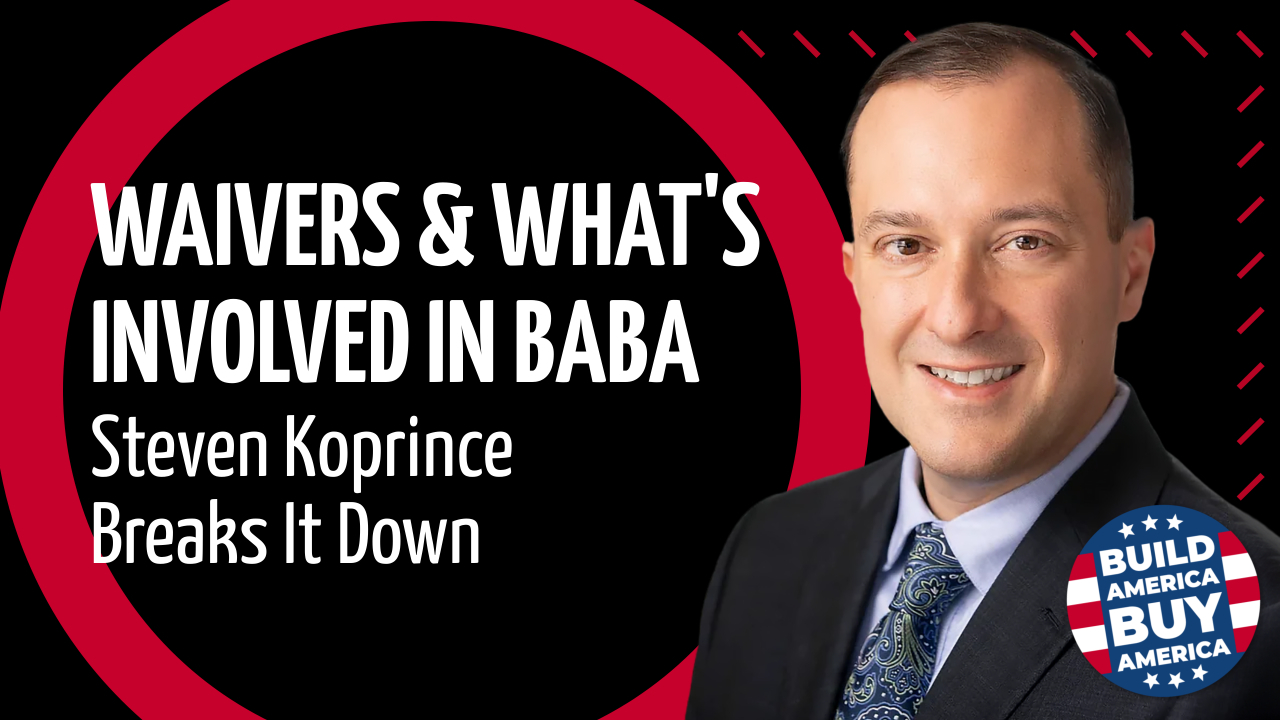
See Steven Koprince, government purchasing expert and founder of Govology, discuss BABA Waivers and which materials are susceptible to BABA requirements here:
“What are BABA waivers” and “What is BABA compliance” are just two of the topics covered by Koprince, who has over 20 years of experience with federal purchasing matters, in our free, on-demand webinar!
Or, you can download the Executive Summary and learn if these resources can help you understand domestic sourcing and benefit from investments in US infrastructure.
Reasons for BABA Waivers
There are three main reasons that a waiver may be issued:
- Nonavailability Waivers: Granted when a product is not produced in sufficient quantities or quality in the United States.
- Public Interest Waivers: Issued when applying BABA requirements would be inconsistent with the public interest.
- Unreasonable Cost Waivers: Approved when using domestic products would increase the overall project cost by more than 25%.

What is the BABA Waiver Process?
It’s crucial to understand that individual suppliers, distributors, or manufacturers cannot directly request BABA waivers. The process involves several steps:
- Identify the Need: Determine if your project requires materials not readily available domestically.
- Contact the Grant Recipient: As a contractor or installer, communicate with the federal financial assistance recipient (typically a state or local government entity).
- Waiver Request Submission: The grant recipient must submit a formal waiver request to the relevant federal agency.
- Agency Review: The head of the federal agency, often at the secretary level, reviews the request.
- Public Comment Period: If deemed appropriate, the waiver request is posted for public comment.
- Final Decision: The agency makes a final determination based on the request, public comments, and overall impact.
Products and Materials Covered by BABA
Not all products used on the jobsite need to meet these Made-in-America requirements, so baba waivers may not be necessary. BABA requirements apply to three main categories of products used in infrastructure projects:
- Iron and Steel: All manufacturing processes must occur in the U.S., from initial melting through coating application.
- Manufactured Products: At least 55% of the total cost of components must be of U.S. origin, with final assembly in the U.S.
- Construction Materials: All manufacturing processes must occur domestically.
Materials Exempt from BABA Requirements
Certain materials, such as cement and cementitious materials, aggregates (stone, sand, gravel), and binding agents, are exempt from BABA requirements under section 70917(c) of the Act.

Ensuring BABA Compliance
To maintain BABA compliance:
- Thoroughly research domestic suppliers before considering waiver requests.
- Maintain detailed documentation of sourcing efforts and product origins.
- Stay informed about existing waivers and requirements through easy resources:
- MadeInAmerica.gov maintains a list of issued waivers
- Stay informed about other sourcing guidelines, like the Buy American Act.
- The U.S. Department of Commerce website
- This website, which can serve as your IIJA guidebook!
- Consider obtaining a BABA certification letter for your products to streamline future projects.
The Impact on Domestic Supply Chains
The BABA Act aims to strengthen domestic supply chains and boost American manufacturing. While waivers provide necessary flexibility, they are not intended to circumvent the Act’s primary goals. Contractors and project managers should view BABA compliance as an opportunity to contribute to the growth of U.S. industries and job creation.
While BABA waivers offer a pathway for exceptions, they are not easily obtained. An installers main focus should be on sourcing American-made products whenever possible, aligning with the broader objectives of the Infrastructure Investment and Jobs Act.

As the implementation of BABA continues to evolve, staying informed about compliance requirements and waiver processes will be crucial for all stakeholders in federally funded infrastructure projects.
Next Steps
Now that you understand the three-step test to applying BABA, why not watch our FREE on-demand, sponsored webinar featuring Steven Koprince, Government Purchasing expert and former Government Project Attorney.
Can’t find time to attend the webinar? Get the complete Webinar content overview in the Executive Summary by clicking the link below.

Through government programs like IIJA and BABA, over a trillion dollars is available for funding federal projects. Contractors need to understand how to identify what products are USA-made—and distributors need to carry Made-in-America brands their customers can use!
To keep learning about BABA requirements and compliance, you can subscribe to our YouTube channel here!
And Finally…
Whether you are a Contractor looking to stay compliant, or a Distributor looking to help your contractor clients purchase the correct Made in USA products, the Comply When You Buy Webinar is the best starting point for you to learn the ins and outs of federal infrastructure procurement!
The Comply When You Buy Webinar is sponsored by NSI Industries, a leading supplier of American-made electrical components, HVAC and appliance parts, and network infrastructure solutions.
Shop trusted American brands like Polaris Connectors, Bridgeport Fittings, and Remke Cord Grips that meet BABA manufacturing requirements.
Leave a Reply