
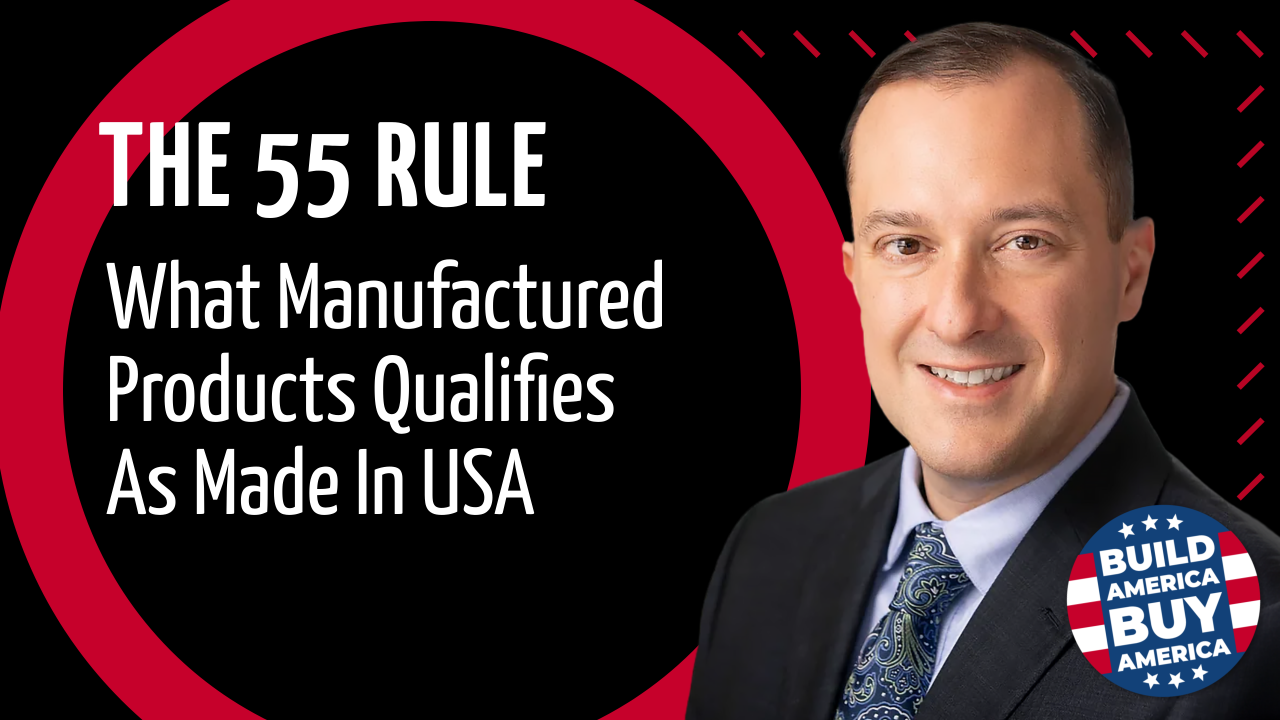
The Build America, Buy America Act (BABA), a key component of the Infrastructure Investment and Jobs Act (IIJA), has introduced important BABA product requirements for manufacturers and suppliers involved in federally funded infrastructure projects.
One of the key components of BABA compliance is the “55% rule,” which determines whether a manufactured product qualifies as “Made in America.” In this blog post, we will break down the 55% rule, explain how to determine which components qualify, and provide insights into navigating BABA product requirements.
What Are BABA Product Requirements?
BABA product requirements establish guidelines for using American-made materials in federally funded projects. Under these requirements, manufactured products must meet specific criteria to be considered compliant. The primary focus is on ensuring that a significant portion of the product’s components are sourced domestically.
The 55% rule and how to determine BABA compliance and just two topics covered by Koprince, who has over 20 years of experience with federal purchasing matters, in our free, on-demand webinar!
Or, you can download the Executive Summary and learn if these resources can help you understand domestic sourcing and benefit from investments in US infrastructure.
The Definition of Manufactured Products
Manufactured products are defined as articles, materials, and supplies that have been processed into specific forms and shapes or combined with other articles, materials, and supplies. When classifying products under BABA, it is essential to refer to these definitions to determine how each product fits within the established categories.

You’ll need a wide range of products on the jobsite, but BABA doesn’t apply to all of them, and not all are manufactured products. Do you know which of the products above qualify? If you’re uncertain, watch our free “Comply When You Buy” Webinar today to learn all the answers!
The 55% Rule: What Is It?
The 55% rule is a critical component of BABA compliance for manufactured products. According to this rule:
- The cost of domestic components must exceed 55% of the total cost of all components in the manufactured product.
This means that while not every component needs to be sourced from the U.S., the majority must be. This requirement aims to promote domestic sourcing while allowing some flexibility for manufacturers.
When does the 55% Rule Apply to BABA Product Requirements?
When Congress adopted the BABA, it aimed to strengthen domestic sourcing requirements without weakening existing laws. Prior to BABA, various agencies had their own domestic sourcing rules, some of which required higher percentages than 55%. Therefore, if a pre-existing law mandates a higher percentage for a specific product, that higher percentage takes precedence over the 55% rule.
For example, the Federal Transportation Administration has established a 70% threshold for rolling stock. In such cases, manufacturers must adhere to this higher requirement rather than the standard 55%.
How to Determine Which Components Qualify as Made in America
To assess whether a manufactured product meets the 55% requirement, follow these steps:

Step 1: Identify Components
Break down the manufactured product into its individual components. This includes all parts and materials used in its construction.
Step 2: Calculate Costs
Determine the total cost of all components involved in the manufactured product. This calculation should include:
- The cost of raw materials
- The cost of domestically sourced components
- Any applicable shipping or handling fees
Step 3: Apply the 55% Rule
Once you have identified and calculated the costs of all components, apply the 55% rule:
Percentage of Domestic Components = (Cost of Domestic Components / Total Cost of All Components) × 100
If this percentage exceeds 55%, then your product qualifies as “Made in America” under BABA requirements.
Exclusions from Cost Calculations
It’s important to note that certain costs are excluded from this calculation. For example:
- Costs associated with manufacturing processes
- Overhead costs unrelated to component sourcing
Understanding what costs are included and excluded is crucial for accurate calculations.
Resources for BABA Product Requirement Compliance
For additional guidance on navigating BABA product requirements and understanding compliance obligations, consider utilizing resources such as:
- MadeInAmerica.gov: This office provides comprehensive information on domestic sourcing regulations and available waivers.
- IIJA Executive Summary: Our resource, created to serve as the companion to our Comply When You Buy webinar, that outlines funding rules and compliance requirements related to infrastructure projects.

Conclusion
The BABA product requirements, particularly the 55% rule, play a vital role in promoting American manufacturing and ensuring that federally funded projects benefit U.S. businesses. By understanding how to determine which components qualify as Made in America and following the necessary calculations, manufacturers can navigate these requirements effectively.
As infrastructure investment continues to grow under initiatives like the IIJA, staying informed about BABA compliance will be essential for contractors and suppliers looking to succeed in government contracting. Embracing these standards not only supports domestic industries but also contributes to building a stronger American economy.
Next Steps
Now that you understand the 55% rule, why not watch our FREE on-demand, sponsored webinar featuring Steven Koprince, Government Purchasing expert and former Government Project Attorney.
Can’t find time to attend the webinar? Get the complete Webinar content overview in the Executive Summary by clicking the link below.

Through government programs like IIJA and BABA, over a trillion dollars is available for funding federal projects. Contractors need to understand how to identify what products are USA-made—and distributors need to carry Made-in-America brands their customers can use!
To keep learning about BABA requirements and compliance, you can subscribe to our YouTube channel here!
And Finally…
The Comply When You Buy Webinar is sponsored by NSI Industries, a leading supplier of American-made electrical components, HVAC and appliance parts, and network infrastructure solutions.
Shop trusted American brands like Polaris Connectors, Bridgeport Fittings, and Remke Cord Grips that meet BABA manufacturing requirements.
Leave a Reply